
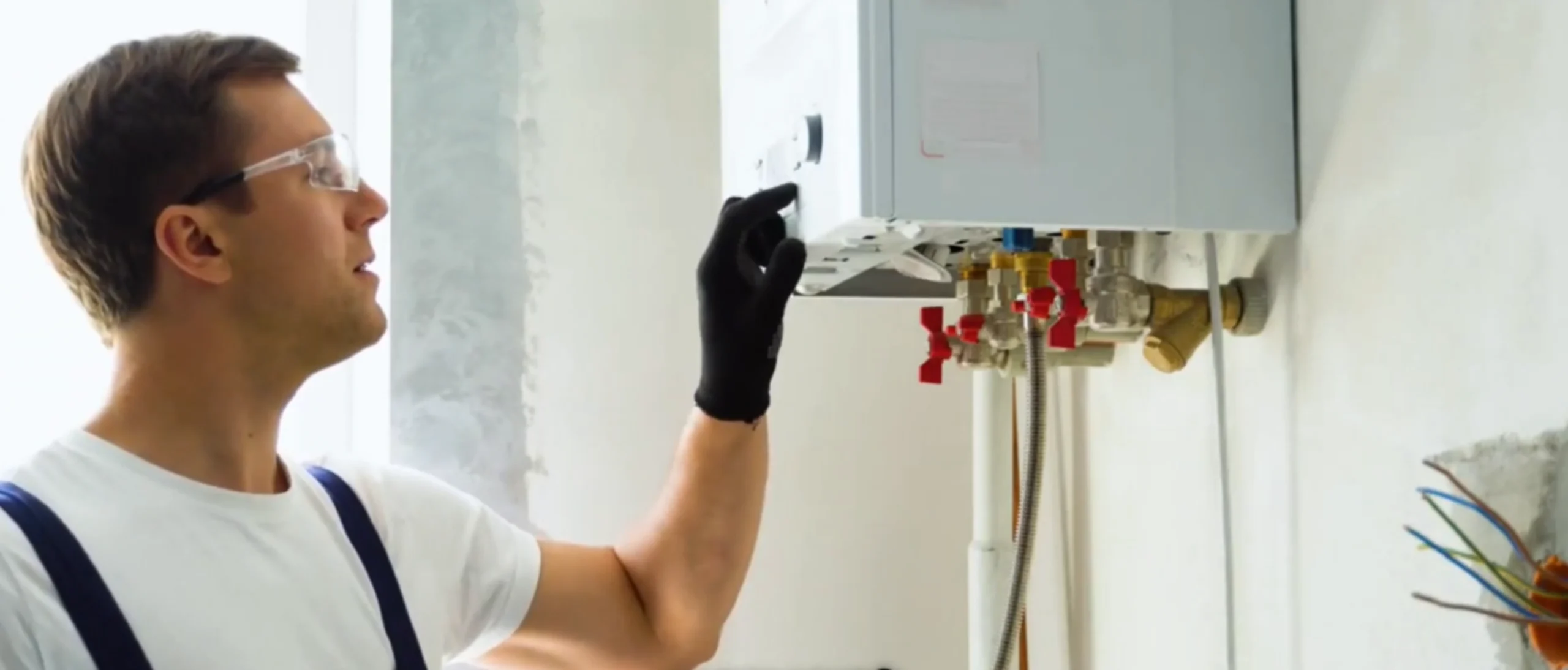
Tankless vs Tank Water Heater for Colorado Homes
Short answer: Tank heaters are a simple swap. Tankless heaters are a bigger install but give endless hot water, last longer and use less energy. In Colorado, tankless must be sized for altitude and cold winter water, and often needs a bigger gas line.
| Tank | Tankless | |
|---|---|---|
| Hot water | Limited by tank size | Continuous |
| Lifespan | Often 8–12 years | Often 15–20 years |
| Space | Floor space | Wall-mounted |
| Maintenance | Flush yearly | Descale yearly |
| Install changes | Usually none | Gas line, venting, condensate |
Colorado factors
- Altitude: gas units must be rated or adjusted for high altitude.
- Cold incoming water: size for winter, or flow drops.
- Hard water: scale affects tankless more. See Arvada hard water.
Which is right for you?
- Tank: simple replacement, average hot-water use.
- Tankless: bigger household, long showers, limited space, staying in the home long-term.
Can’t decide? Call to talk through both options.
Real-world sizing example
A tankless unit is sized by flow rate (gallons per minute) and temperature rise. In winter, water entering an Arvada home is cold, so the heater has to raise it a lot. Two showers at about 2 gallons per minute each plus a faucet can need around 5 or more gallons per minute at a high temperature rise. A unit that looks big enough on paper for summer can fall short in January.
Questions to ask before buying
- Is my gas line big enough?
- Where will it vent?
- Is the unit rated for high altitude?
- What flow rate does it deliver at winter temperature rise?
- Do I need a water softener to protect it?
Related pages
Frequently asked questions
Does tankless work during a power outage?
Most gas tankless units need electricity to run, so they stop during an outage.
Can I add tankless to an existing home?
Usually yes, but gas line size and venting must be checked first.
Hard water and tankless
Scale builds up inside a tankless heat exchanger faster than in a tank, because the water passes through narrow passages at high temperature. In areas with hard water, plan on yearly descaling or a softener to protect the unit and keep the warranty valid.
Space and installation
| Question | Tank | Tankless |
|---|---|---|
| Where it goes | Floor of utility room or closet | Wall-mounted |
| Venting | Existing vent often reused | Usually new venting |
| Gas line | Often reused | Often upsized |
| Install time | A few hours | Often a full day |
Recommendation
- Replacing a failed tank in a hurry: a same-size tank is usually fastest.
- Planning ahead with a larger household: tankless can be worth it.
- Small home, low use: a standard tank is usually the better value.
Key takeaways
- Tank heaters are a quick swap.
- Tankless heaters last longer and give continuous hot water but often need gas and venting upgrades.
- In Arvada, size tankless for winter water temperature and altitude.
- Hard water makes yearly descaling important for tankless units.
Either way, the new heater needs a City of Arvada permit and inspection, and it should be set up for altitude. Ask that both are included in the quote.
Local plumbers install both tank and tankless water heaters across Arvada, including Arvada 80005 and Arvada 80007.
Ask for a written water heater quote before work starts.
Talk with a local Arvada plumbing pro about your problem and your options.