

Expansive Clay Soil & Sewer Lines in Arvada
Short answer: Much of the Front Range sits on expansive clay that swells when wet and shrinks when dry. Over years, that movement can push sewer pipes out of line, creating sags, offset joints and cracks, especially in older clay and cast-iron pipe.
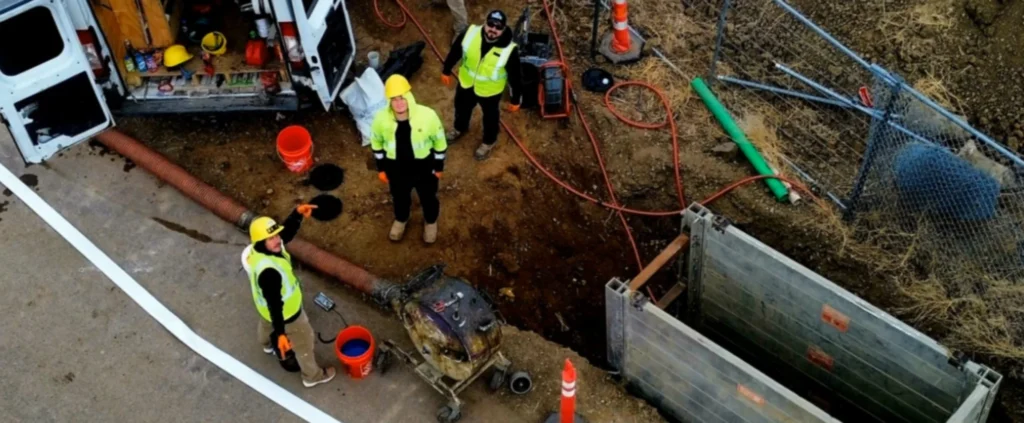
How soil movement damages sewer lines
- Sags (bellies): a section sinks, and waste collects in the low spot.
- Offset joints: pipe sections shift so they no longer line up.
- Cracks: rigid clay and cast iron crack under pressure.
- Root entry: roots find the gaps and grow inside.
Warning signs
- Main line clogs that keep coming back
- Gurgling drains
- Water rising in the basement floor drain
- Sewer smell in the yard or basement
- Lush, green patches over the sewer line
How it’s fixed
| Problem | Typical fix |
|---|---|
| Minor offset with roots | Clean and monitor, or line the pipe |
| Sag in one section | Spot repair |
| Many cracks or offsets | Pipe lining or pipe bursting |
| Collapsed pipe | Excavate and replace |
The first step is always a camera inspection.
Repeat sewer clogs? Call to discuss your plumbing problem.
Sources: Colorado Geological Survey: Swelling soils
Why Arvada is affected
The Colorado Geological Survey describes swelling soil as a common and sometimes serious problem in Colorado that can damage houses. Clay-rich soil absorbs water and expands, then shrinks as it dries. Lawn watering, snowmelt and dry spells all change soil moisture around a buried sewer line year after year.
Which pipes are most at risk
| Pipe material | Risk from soil movement |
|---|---|
| Clay (vitrified) | High. Short sections with many joints that can shift |
| Cast iron | Medium. Rigid and can crack, also corrodes |
| Orangeburg | Very high. Soft pipe that deforms |
| PVC | Lower. Fewer joints, more flexible, but can still sag if bedding fails |
Reducing the risk
- Keep downspouts and sprinklers from soaking the soil over the sewer line.
- Avoid planting large trees near the line.
- Camera the line every few years in older homes.
- If replacing, ask about proper bedding and pipe material for clay soil.
Related pages
What to do if you suspect soil damage
- Write down the symptoms and when they started, such as slow drains, backups or a soggy spot in the yard.
- Book a sewer camera inspection to see the inside of the line.
- Ask for the distance to each sag or crack, so a repair can target the right spot.
- Keep the video. It helps you compare later, and buyers will ask for it if you sell. See home buyer sewer inspection.
What a camera inspection usually shows
On a camera, soil movement often shows up as offset joints, cracks that run along the pipe, or a belly where a section has sunk and holds water. Roots tend to find those openings. The video shows how far down the line each problem is, which helps decide between a spot repair, lining or replacement.
- Offset or separated joints
- Longitudinal cracks
- Bellies or sags that hold water
- Root intrusion at joints
Questions to ask before approving a big repair
Ask how long the damaged section is, whether lining is an option, and whether a spot repair would solve the problem for now. If replacement is recommended, ask whether trenchless methods can be used and what permits are needed.
Frequently asked questions
Can soil movement damage water lines too?
Yes, but water lines are pressurized and usually leak rather than sag. See leak detection.
Is trenchless repair possible in clay soil?
Often yes, depending on the pipe condition and sags. A camera inspection decides.
Get the footage before you sign anything.
Talk with a local Arvada plumbing pro about your problem and your options.
Signs the soil is moving your sewer line
- Backups that come back every few months even after cleaning
- A camera showing a belly (low spot) that holds water
- Cracks or offset joints at clay pipe connections
- Soggy or sunken spots in the yard over the sewer route
Repair options compared
| Option | When it fits | Trade-off |
|---|---|---|
| Root cutting and cleaning | Minor roots, pipe still round | Temporary; may need repeating |
| Spot repair | One damaged section | Digs one small area |
| Lining (trenchless) | Cracked but not collapsed pipe | Does not fix a sag |
| Full replacement | Collapsed or badly sagging line | Biggest job, longest fix |
Start with a sewer camera inspection