
How to Prevent Frozen Pipes in Arvada Homes
Arvada’s cold season usually runs from mid-November into early March, but the pipes that freeze here are not always the ones you expect. The real risk comes from the swing: a sunny 50-degree afternoon followed by a hard overnight freeze. Pipes in exterior walls, crawlspaces and garages get little warning. This guide covers how to prevent frozen pipes in an Arvada home, how to tell if a pipe is frozen, and what to do before it bursts.
Which Pipes Freeze First in Arvada Homes
| Location | Why it freezes | Common in |
|---|---|---|
| Outdoor hose bibs | Water trapped behind a connected hose | Every neighborhood |
| Sprinkler backflow preventer | Exposed above ground on the house wall | Homes with irrigation |
| Pipes in exterior garage walls | Garage drops near outdoor temperature overnight | Ralston Valley, central Arvada |
| Crawlspace supply lines | Vents and gaps let cold air in | Olde Town, older south Arvada |
| Kitchen sink on an outside wall | Cabinet blocks warm air | Many 1970s–90s homes |
| Bonus rooms over garages | Thin insulation under the floor | Newer northwest Arvada homes |
How to Prevent Frozen Pipes
Before the first hard freeze
- Disconnect every garden hose, including from frost-free spigots.
- Blow out sprinkler lines and drain the backflow preventer. See sprinkler winterization.
- Add foam pipe insulation to exposed pipes in garages, crawlspaces and unfinished basements.
- Seal gaps where cold air reaches pipes, such as around dryer vents and sill plates.
- Find your main water shut-off and make sure it turns. See how to find your main shut-off.
On very cold nights
- Keep the thermostat at the same temperature day and night, at least 55°F.
- Open sink cabinet doors on outside walls so warm air reaches the pipes.
- Let a cold faucet drip slowly on the coldest nights, especially one on an exterior wall.
- Keep the garage door closed if water lines run through the garage.
If you are leaving town
- Never turn the heat off. Set it to at least 55°F.
- Consider shutting off the main water and draining the lines if you will be gone for a long time.
- Ask someone to check the house during a cold snap.
Signs a Pipe Is Frozen
- No water, or only a trickle, from one faucet after a cold night.
- Frost on an exposed pipe.
- A toilet that does not refill.
- Strange smells from a drain, since a blocked pipe can push odors back.
What to Do If a Pipe Is Frozen
- Shut off the main water before the pipe thaws, in case it has already split.
- Open the faucet the frozen line feeds so melting water has somewhere to go.
- Warm the pipe slowly with a hair dryer, a space heater kept at a safe distance, or warm towels. Start from the faucet side and work back.
- Never use an open flame or a torch on a frozen pipe.
- If you cannot find or reach the frozen section, call a plumber.
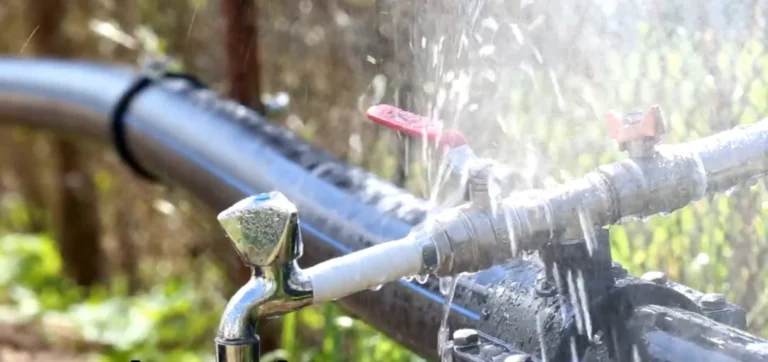
A frozen pipe often splits overnight but only starts leaking once it thaws, sometimes the next afternoon. Check garages and lower levels after any cold night. If water is already spraying, shut off the main and call (720) 753-0047. See burst pipe repair in Arvada.
Vacant Homes and Rentals
Empty homes are where the worst freeze damage happens, because a leak can run for days before anyone notices. If you own a rental or a home between tenants, read the Arvada landlord plumbing guide and our post on winterizing a vacant home.
Frozen Pipes by Arvada Neighborhood
Where your home sits in Arvada, and when it was built, changes which pipes are most at risk. Older homes tend to have more exposed pipe and less insulation. Newer homes are better sealed but have more irrigation, bonus rooms and long runs through garages.
Olde Town and south Arvada (80002, 80003)
Many homes here have crawlspaces, older galvanized or copper supply lines, and foundations with gaps that let cold air in. Check crawlspace vents in late fall. Closing or covering them for the winter, if your home allows it, keeps cold air off the pipes. Look for any pipe that runs along an outside wall without insulation.
Lake Arbor, Ralston Valley and West Woods (80003, 80004, 80005)
Split-levels and ranches from the 1970s through the 1990s often run supply lines through garage walls to reach a laundry room or hose bib. Those garage walls are the most common place we hear about split pipes after a cold snap. Insulate any line you can reach and keep the garage door closed on cold nights.
Candelas, Leyden Rock, Whisper Creek and Geos (80007)
Newer homes are tighter, but sprinkler systems, backflow preventers and pipes in rooms over garages are still vulnerable. Northwest Arvada also sits a little higher and more exposed to wind, which can drop temperatures around the foundation quickly. Make sure every backflow device is drained and every hose is disconnected.
How a Pipe Actually Bursts
It is not the ice itself that splits most pipes. As water freezes, it expands and pushes the remaining water toward a closed faucet. Pressure builds between the ice and the faucet until the pipe gives way, often at a spot that never froze at all. That is why a slow drip helps: an open faucet lets that pressure escape.
It also explains why a split often stays hidden until the next day. While the pipe is frozen, the ice plugs the crack. Once the afternoon warms up, water starts flowing through the opening, sometimes inside a wall where you cannot see it.
Upgrades That Help Long Term
- Frost-free hose bibs move the shut-off valve inside the heated part of the house.
- Pipe insulation and heat cable for lines that must run through cold spaces. Use only cable rated for the pipe type.
- A whole-home leak detector or automatic shut-off valve, which can close the main when it senses a leak.
- Rerouting pipes away from exterior walls during a remodel.
- Sealing air leaks around rim joists and sill plates in basements and crawlspaces.
A plumber can look at problem spots and suggest the simplest fix. Often a few feet of insulation or a new hose bib is all it takes.
Talk to a Local Arvada Plumber First
Free phone consultation. Describe the problem, ask your questions, then decide. No pressure and no obligation.
- ✅ Open 24/7 for leaks, backups and no-heat water emergencies
- ✅ Written quote before work starts, with repair and replace options side by side
- ✅ City of Arvada permits pulled when the job requires one
- ✅ Ask for a Colorado license number and proof of insurance before anyone starts
- ✅ No membership required to get help
Serving Olde Town, Ralston Valley, West Woods, Lake Arbor, Candelas, Leyden Rock and Whisper Creek · ZIPs 80002, 80003, 80004, 80005, 80007
Before you book: how to compare plumbing quotes · water line repair · about this site
Frozen Pipe FAQs
At what temperature do pipes freeze in Arvada?
Exposed pipes can start to freeze when outdoor temperatures fall into the low 20s or below, especially overnight after a mild day.
Should I drip my faucets in Arvada?
On the coldest nights, a slow drip from a faucet on an exterior wall can help prevent freezing.
Can I thaw a frozen pipe myself?
Often yes, with gentle heat like a hair dryer. Shut off the main first and never use an open flame.
Does insurance cover burst pipes from freezing?
Many policies cover sudden damage, but coverage can depend on whether the home was heated. Check your policy.
Do frost-free hose bibs still freeze?
They can if a hose is left connected, because the hose traps water in the valve.